Commercialization That Works Research Methodology
About the Commercialization That Works research series
Commercialization That Works is Beghou’s ongoing research series examining what enables commercialization strategies, capabilities, tools, and interactions to deliver value in practice.
Through broad industry research and focused pulse surveys, the series brings together perspectives from life sciences leaders, field professionals, healthcare professionals (HCPs), and other stakeholders across the commercialization ecosystem. Each study explores a distinct challenge, but all share a common objective: to understand what commercialization stakeholders need to design coherent strategies, make more informed decisions, work more cohesively, and create more meaningful experiences for HCPs and patients.
Different samples and research designs are used based on the questions being explored. Findings should therefore be interpreted within the context of each study’s audience and methodology rather than compared directly across surveys, interviews, and panels.
2026 Commercialization That Works Research
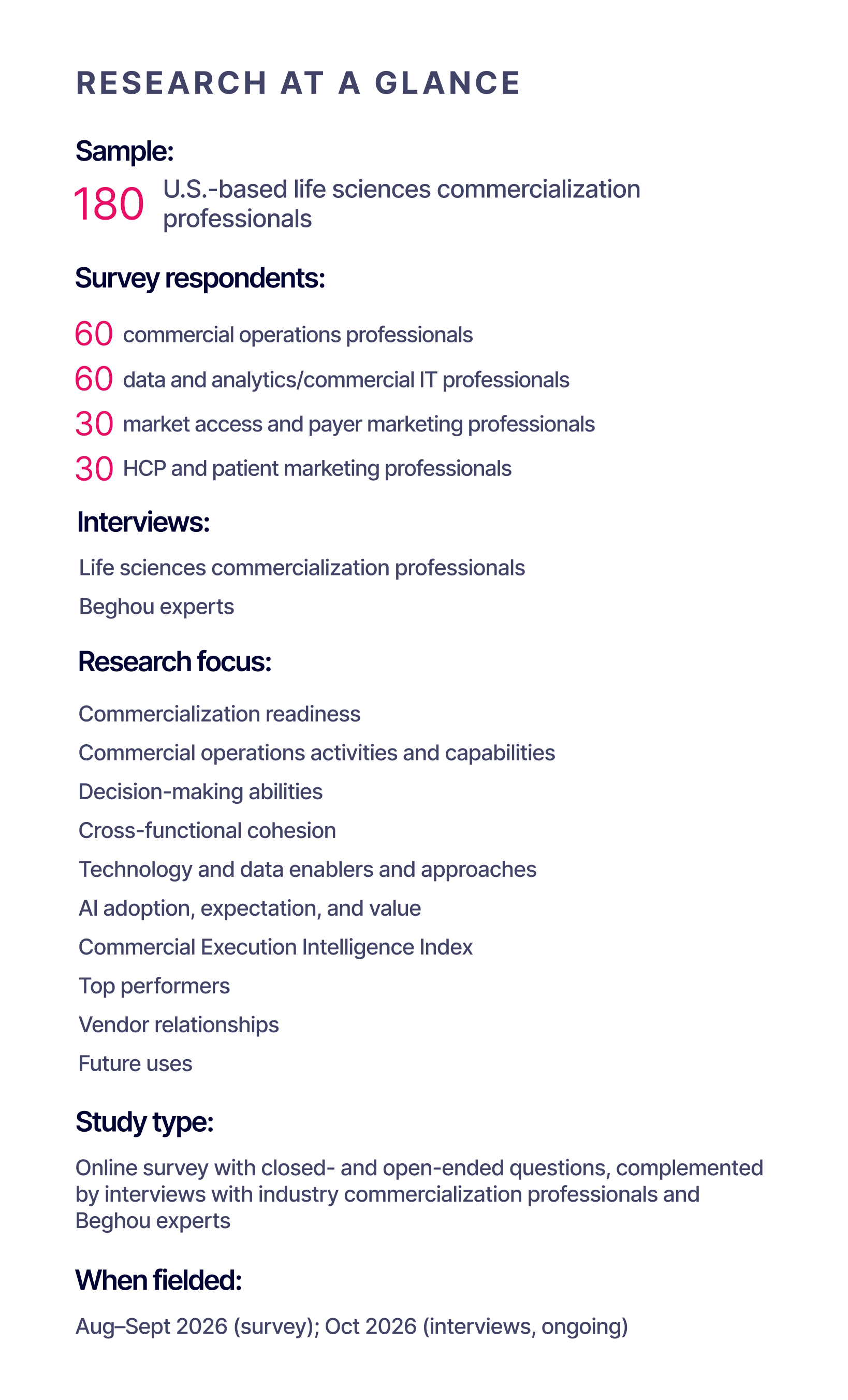
The second year of the flagship Commercialization That Works research built on 2025’s findings around cross-functional cohesion to expand into go-to-market and commercial operations activities and examine the technology, data, and organizational enablers needed to act on AI-informed decisions.
The study introduced a Commercial Execution Intelligence (CEI) index, a five-domain scoring framework (Strategic Precision, Field Design, Performance Architecture, Operational Agility, Commercial Intelligence), as a baseline for annual tracking of consistency in translating commercial strategy into coordinated field execution. The results around commercial readiness were also examined through the operational principles of coherence, cohesion, and composability.
Respondents were Director-level or above; evenly distributed across large biopharma, small- to mid-sized pharma, and emerging biotech companies; and had been involved in at least one product launch or commercialization effort within the past 24 months.
The survey explored how biopharma commercial models are performing today and where they’re headed, what’s required to meaningfully apply AI in commercial work, how organizations assess AI value, and what readiness looks like in practice.
The qualitative interviews added context and additional depth to the survey findings, with industry leaders and Beghou experts offering their perspective on what’s driving commercialization readiness and how AI successfully fits into the commercialization model.
2026 AI Enablement Survey
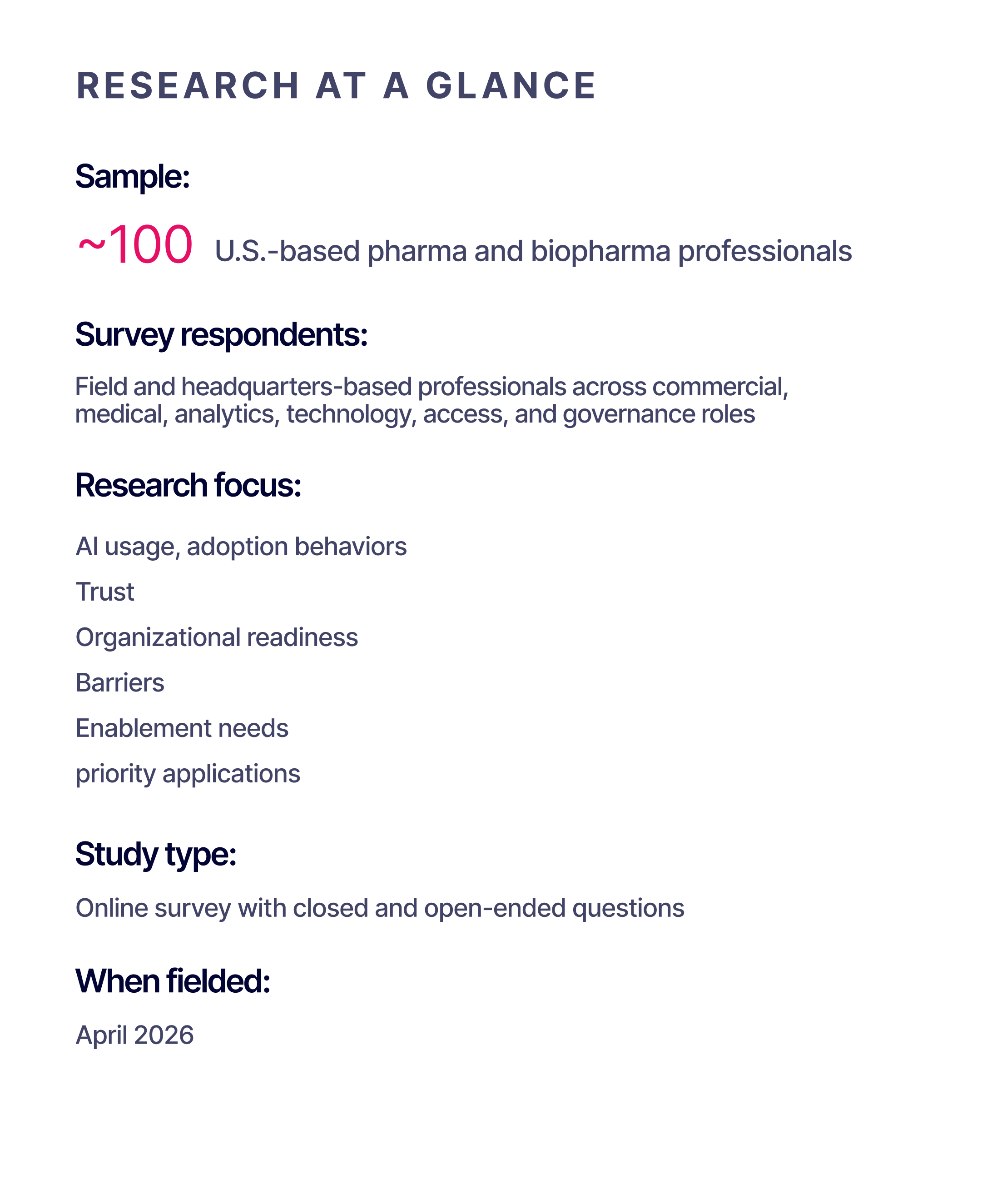
The Commercialization That Works: AI Enablement survey explored how life sciences professionals are using AI at work, how they perceive its value and risks, and what organizations need to provide to support sustained AI adoptionand effective use.
Respondents represented a range of organizational levels and industry experience. More than half had worked in the industry for at least 11 years, and the majority held manager- or director-level positions.
The survey examined current AI usage, familiarity with different platforms and tools, personal adoption behaviors, organizational readiness, barriers to adoption, trust, workflow fit, training and governance needs, and the AI application areas respondents believed could create the most value.
Subsequent analysis was used to segment respondents into eight different persona types, five of which the researchers deemed influenceable. Results support a tailored approach to facilitating AI adoption in organizations.
2026 Field Force Pulse Survey
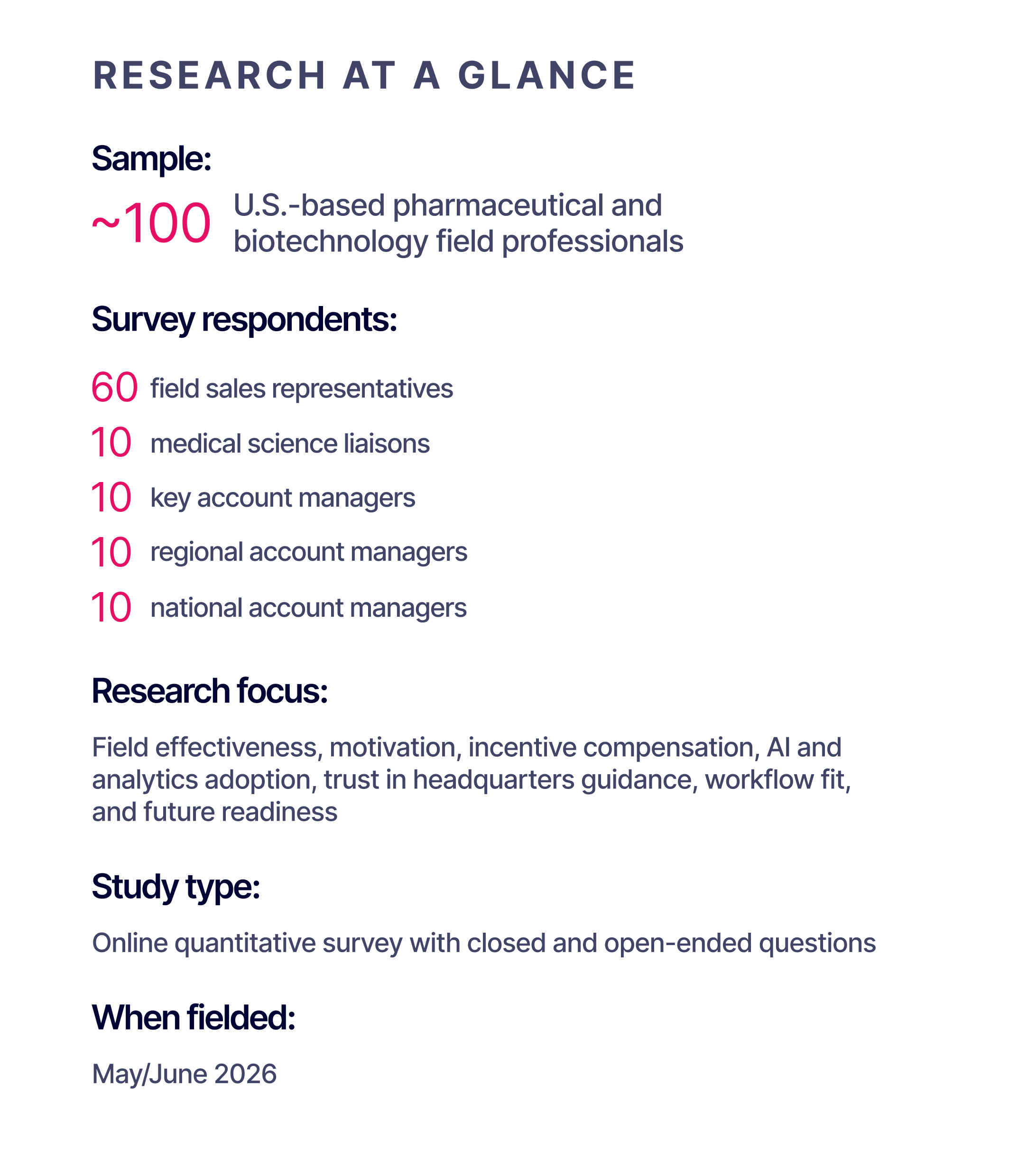
The Commercialization That Works: Field Force Pulse Survey examined what drives field effectiveness and the adoption of AI, analytics, and other field-facing tools.
All respondents had at least six months of field experience. Respondents were also approximately evenly distributed across emerging, mid-sized, and large pharmaceutical and biotechnology companies.
The research examined field motivation and incentive compensation, access to and use of AI and analytics, involvement in tool design, workload changes following technology rollout, trust in headquarters guidance, barriers to adoption, current support gaps, and readiness for more hybrid and data-driven field models.
2025 flagship Commercialization That Works research
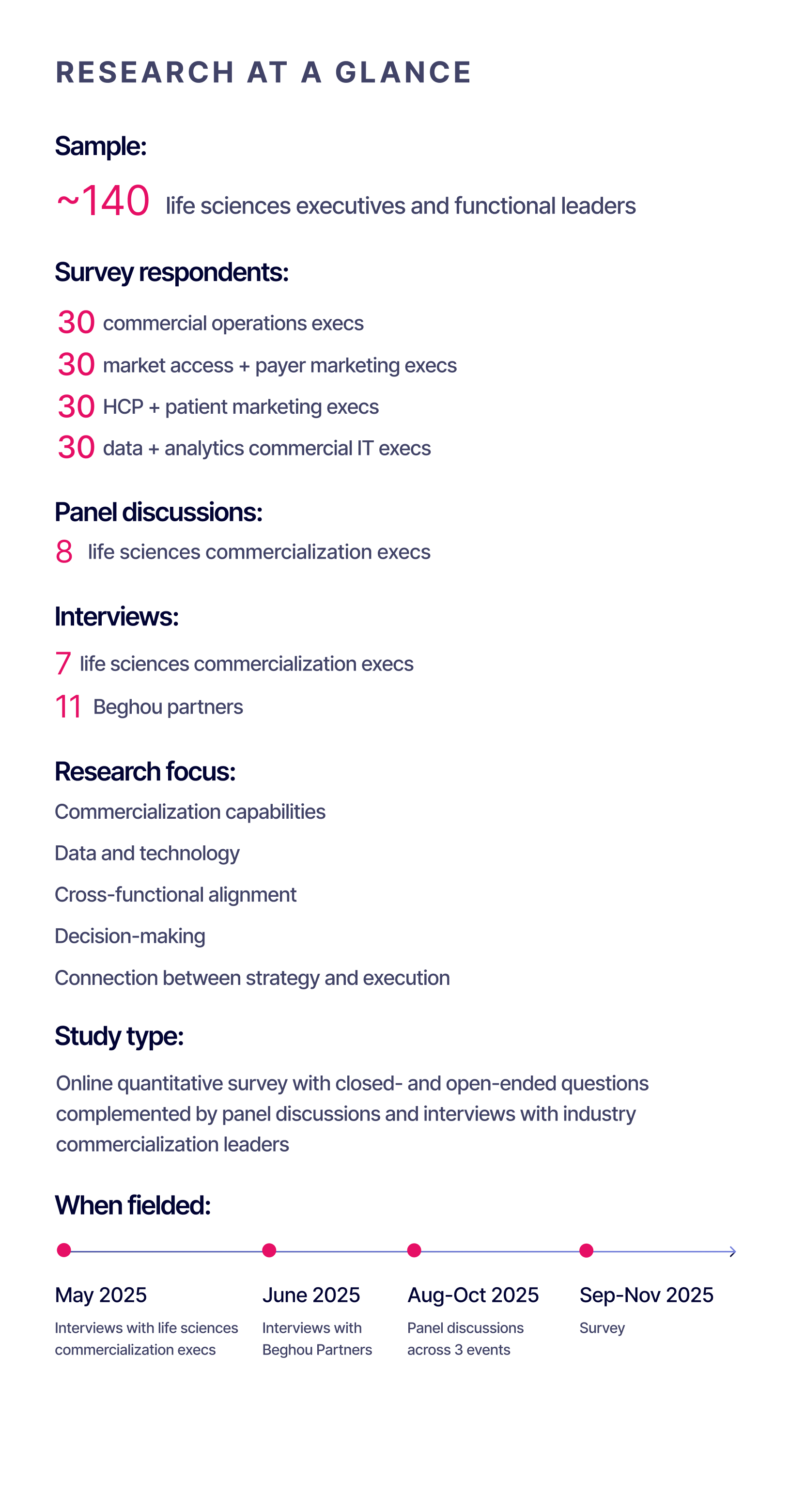
The flagship 2025 Commercialization That Works research examined how life sciences organizations were navigating the changing demands of commercialization across functions and stages of the product life cycle.
The research was designed to identify both areas of progress and persistent gaps between commercial strategy and execution. Its findings provided the foundation for the broader Commercialization That Works research platform, an inaugural report, and subsequent research into more focused topics and stakeholder groups.
Respondents were evenly split across company size: large biopharma, small to mid-sized pharma, and emerging biotech companies. All held Director or higher roles, and 80% had been involved in at least 3 launches.
The survey explored commercialization investment priorities, factors contributing to a successful launch, commercialization planning, commercialization team structures and cross-functional launch coordination, data and technology infrastructure, and vendor relationships and satisfaction.
The qualitative components (interviews, panel discussions) provided additional depth on what separates high-performing commercialization organizations from the rest.